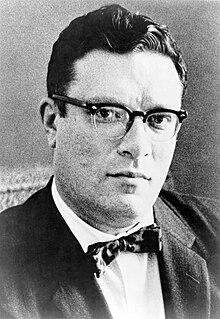
The impact of the Foundation stories has been felt in every form of series fiction written since its time, and most significantly in the fiction written for tabletop and electronic gaming. Until Foundation, attempts to build a cohesive mythology around an entirely fictional setting had been mostly accidental and abortive. It’s possible that Asimov’s work was taken more seriously than E.E. Smith’s Lensman series (with which it shares many similarities) due to Asimov’s emphasis on science and problem-solving rather than action, and his choice of humans as the protagonists instead of Smith’s Arisians. It also seems likely that Asimov’s writing was more approachable than Tolkien’s heavily literary style.
Showing posts with label societal responsibility. Show all posts
Thursday, October 12, 2023
Forward the Foundation
Isaac Asimov’s Foundation series is most well known as the winner of the Hugo Award for “Best All-Time Series” in 1966, the only series to date to which the award has been given. Asimov himself assumed the award had been created to honor J.R.R. Tolkien and was surprised to receive it. The original short stories were published between 1942 and 1950 in the pages of Astounding Magazine. These were later collected, and additional material added to form the novels known as the Foundation Trilogy.
Saturday, October 7, 2023
A Look at Three Robert Heinlein Novels
Robert A. Heinlein consistently tackled social themes through the framework of his speculative fiction in such a way as to force to reader to confront his own opinions on the subject at hand. Though Heinlein's work is generally considered to be “hard” sci-fi instead of space opera, the author seldom delved into the fundamentals of the science or problem solving behind the technology of his stories. Instead, Heinlein tended to focus on the evolution of society, the individual's role within society, and the responsibility of individuals towards their society. His protagonists are nearly always adventurers, philosophers, or engineers of some sort instead of natural or mathematical scientists of the kind favored by Asimov.
Three of Heinlein's most famous works received Hugo awards (Stranger in a Strange Land, Starship Troopers, and The Moon is a Harsh Mistress) while the man himself was named the first Grand Master of the Science Fiction Writers of America in 1974.
Subscribe to:
Posts (Atom)